

Prefer to read this offline?
Download the full guide as a PDF, same content, yours to keep.
Part 1: Choosing the Right System
A heat pump is one component of a heating system, not the whole of it.
The system also includes how heat is distributed through the building, how rooms are cooled in warmer weather, how the system is controlled, and any solar generation and storage alongside it. When every part is designed to work together, a home is heated efficiently and reliably for decades.
Air source
An air source heat pump extracts heat from the outside air, even in winter, and raises it to a useful temperature to heat the home and produce hot water. In reverse, with suitable emitters, it can also provide cooling. The unit sits outside, similar to an air-conditioning condenser, and suits the majority of properties; larger units serve bigger or older homes. It’s the most widely used type of renewable heating and performs well across the UK climate, including in commercial and public-sector buildings.
Efficiency, SCOP and weather compensation
Efficiency is measured by SCOP, the Seasonal Coefficient of Performance, the average heat produced per unit of electricity across a whole heating season, rather than on a single cold day. A well-designed air source system typically returns 3.5 to 4.5 units of heat for every unit of electricity it uses. Reaching the upper end depends on the weather compensation curve: the controls continuously adjust the flow temperature to the outside conditions, running cooler and more efficiently in mild weather and working harder only on the coldest days. Set correctly, the system delivers its rated SCOP year-round; set poorly, even good hardware underperforms, which is why design matters as much as the unit itself.
Ground source
A ground source heat pump draws heat from the ground through buried pipework, vertical boreholes or a horizontal loop. Groundworks make it more expensive to install, but it typically delivers the lowest running cost and the quietest operation, and the ground’s stable temperature keeps performance consistent whatever the weather. Where the site allows, it’s the strongest choice for long-term running cost.
Solar and battery storage
Solar panels generate electricity that can help run the heat pump; a battery stores it for when the sun isn’t shining. Sized together with the heat pump, they reduce the electricity a home draws from the grid and lower running costs further. Combined properly, through hybridisation, the panels and heat pump operate as one system.
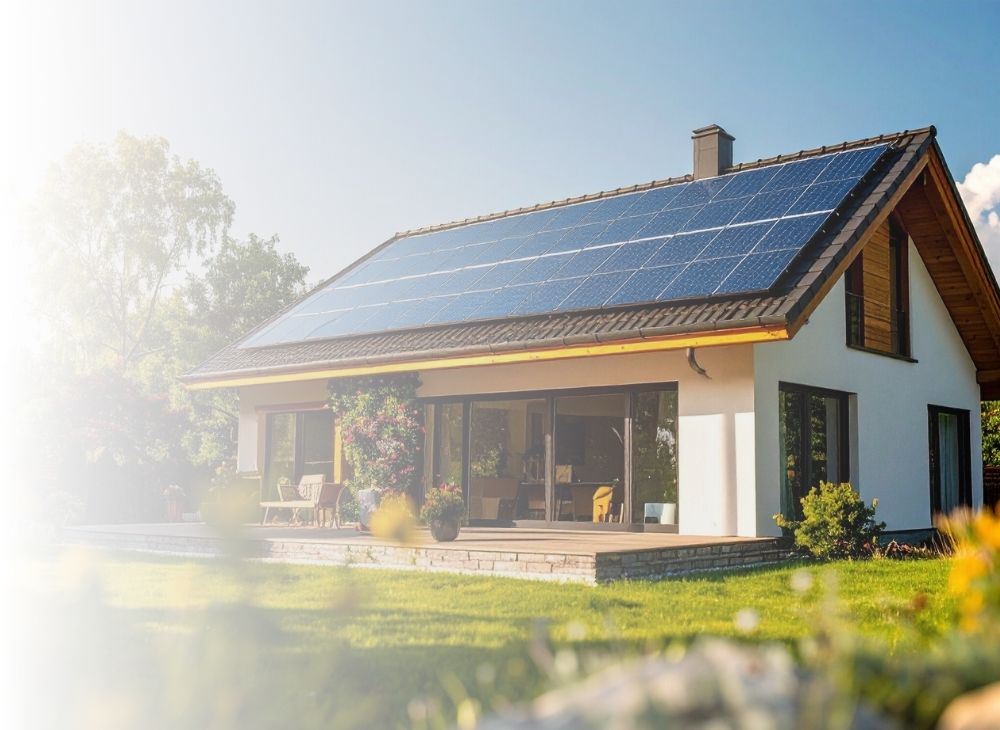
Hybridisation: solar and heat pump as one system
Hybridisation links solar and heat pump so surplus power is used rather than exported. The panels generate electricity, the heat pump takes what it needs, and any surplus is stored as heat for later.
How it works:
- The panels generate electricity, which first powers whatever is already running in the home.
- When there’s a surplus, the system identifies power that would otherwise be exported to the grid.
- The heat pump enters a surplus mode, targeting a slightly higher temperature to store the extra energy as heat.
- It modulates moment to moment, matching output to the surplus available, adjusting even as a cloud passes.
- As generation falls, it returns to its normal efficient settings, and the stored heat covers the evening.
Smart-grid and tariff ready
UK electricity tariffs increasingly vary by time of day. Time-of-use plans such as Octopus Agile, Cosy and Go charge different rates through the day, and at times pay you to use power. A hybrid-ready system runs harder when prices are low and eases off when they’re high, stays within your contracted power limit, and works with whatever you generate.
The benefits, in short:
- Lower bills: More of your solar is used at home rather than exported.
- Lower carbon: Less grid electricity, particularly during high-carbon peak periods.
- Lower upfront cost: Thermal storage can reduce or remove the need for a home battery.
- Better comfort: Hot water is always available, and the home can be pre-warmed cheaply.
- Simpler installation: On the systems we specify, the energy manager is built in, no separate diverter box or extra wiring.
Design First
Three things turn a correctly sized system into an excellent one: emitters suited to low flow temperatures (appropriately sized radiators or underfloor heating); controls that are simple to understand and let the system run gently and continuously; and thorough commissioning, so the system performs at its design efficiency from the first day, rather than the lower figure many systems settle into.
The equipment we specify. For air source, when combined with solar PV, we specify the Ecoforest ecoAIR⁺, chosen for its efficiency, solar hybridisation, wide inverter modulation and its built-in energy management.
What affects performance and running cost
- Insulation and draughts. The less heat a home loses, the more economical the system. Improving the building fabric is often the best first investment.
- Emitters. Heat pumps work best at low flow temperatures, so radiators or underfloor heating may need sizing or upgrading. A competent installer checks this.
- Efficiency (SCOP). This tells you how much heat you get per unit of electricity across the year. Higher is better, and good design is what achieves it.
- Controls, zoning and remote management. Good controls run the system gently and continuously and divide the home into independent zones, each with its own emitters and its own heating or cooling. Remote management lets performance be monitored and adjusted from an app.
- Smart-tariff control. Paired with a time-of-use tariff, the system runs hardest when electricity is cheapest, reducing running cost automatically.
Key features: modulation
An older heating system works rather like a light switch: full power, then off, then full power again. That constant cycling wastes energy, wears components and lets rooms drift between too warm and too cool. A modulating, or inverter, heat pump works more like a dimmer, varying its output continuously to match exactly how much heat your home needs at that moment.
In everyday use this matters for three reasons:
- Lower running costs. Running gently and continuously at a low output is far more efficient than repeatedly starting and stopping, so you get more heat from every unit of electricity.
- Steady comfort. The home holds a constant temperature instead of cycling up and down, and the system runs quietly in the background.
- Simpler, lower-cost installation. Ecoforest’s modulation range is unusually wide, so the heat pump can turn its output right down.
This wide modulation also underpins the smart features in this guide: it lets the system absorb surplus solar in real time, hold to your contracted power limit, and run hardest when electricity is cheapest.
| Product | The ecoAIR⁺ is Ecoforest's R290 air-source range (up to 24 kW), from one of the first European makers to combine a modulating inverter compressor with a single unit for heating, cooling and hot water. |
|---|---|
| Refrigerant | Natural R290, with a very low global-warming potential. |
| Performance | Typically 4–5 units of heat for every unit of electricity. |
| Hot water | Heating, cooling and hot water from a single unit; desuperheater-equipped models produce high-temperature hot water without relying on a separate immersion heater. |
| Smart tariff | The built-in ecoSMART energy manager runs the system when electricity is cheapest and stays within your contracted power limit. |
| Solar | Stores solar surplus as heat, moving the home towards self-consumption with little or no need for a battery. |
| Remote management | App-based monitoring and control for you, and remote diagnostics for us, so issues are often identified early. |
Exact features vary by model and configuration; we confirm what your design includes.
Grants and VAT
Owners of domestic properties, barn conversions, light commercial properties and self-developers of domestic new builds who have gas, electric, LPG, oil or no heating could be eligible for the Boiler Upgrade Scheme. We make the application on your behalf and ensure you know the outcome before you commit to your contract.
Zero-rated VAT
Government support reduces the cost. The Boiler Upgrade Scheme currently provides £7,500 towards an air or ground source system, and qualifying work is zero-rated for VAT (0% VAT).
Boiler Upgrade Scheme
As an MCS-certified installer, we claim the grant on your behalf and apply it as an upfront discount, so you never pay it and reclaim it. From 21 July 2026, off-grid homes replacing oil or LPG can claim £9,000 rather than £7,500, a temporary uplift for applications made between 21 July 2026 and 31 March 2027, which suits the rural, off-gas properties many projects occupy.
Visit the Ofgem BUS grant web page
Different homes, different considerations
- New build and self-build. Heating, solar and storage can be designed in from the start, for the lowest running cost and the cleanest result.
- Barn conversions and period homes. Larger volumes and solid walls usually mean higher heat demand, so the fabric and the design matter more, but excellent results are very achievable with the right approach.
- Retrofit and restoration. The most common case: the right design, with modest insulation or emitter upgrades where needed, delivers an excellent result.
Realistic expectations
A well-designed heat pump keeps a home comfortable and warm throughout, and substantially reduces its carbon emissions. Whether your bills fall depends on the fuel you’re replacing, savings are clearest when replacing oil, LPG or electric heating. The accurate answer for any home comes from a proper survey, which is the subject of the second half of this guide.
Part 2: Choosing the Right System
The design and the heat pump brand matter, as does the quality of the installation and aftercare.
The same heat pump can perform well in one home and poorly in another, depending entirely on the quality of the design and installation. Here’s how to choose well.
The non-negotiables
- MCS certification. The installer should be certified under the Microgeneration Certification Scheme. It’s also a condition of the Boiler Upgrade Scheme grant: no MCS, no funding.
- Consumer code membership. A reputable installer belongs to an approved consumer code, which gives you protection and a route to resolution if something goes wrong.
What a proper process looks like
A well-run project follows clear stages, each documented:
- Heat-loss survey. A full, room-by-room calculation of how much heat the home actually needs.
- System design. Heat pump, emitters, controls and any solar or storage sized to work together, with target flow temperatures and SCOP stated.
- Written specification and quotation. The equipment, design and price set out in writing before any commitment.
- Installation. Carried out by trained engineers to MCS standards.
- Commissioning. The system set up and tested to perform at its design efficiency from day one.
- Aftercare. Handover, servicing and ongoing support once the system is running.
Warranties and aftercare
A heat pump is a long-term investment. Look for a clear warranty on both equipment and workmanship, and a sensible aftercare plan. Annual servicing keeps the system at its design efficiency and protects both the equipment and the warranty. A good installer supports the system for the life of your home, not only on the day of installation.
Red flags
- No MCS certification, or vague answers about it
- A price quoted without a proper heat-loss survey behind it
- High-pressure selling, “today only” discounts, or large upfront deposits
- Reluctance to put the design and specification in writing
Questions worth asking
- Are you MCS-certified, and which consumer code do you belong to?
- Will you carry out a full, room-by-room heat-loss calculation?
- What SCOP should I expect for my home, and on what basis?
- Which equipment do you specify, and why?
- What warranty applies to the equipment and to your workmanship?
- Will you handle the Boiler Upgrade Scheme application?
- What aftercare and servicing do you provide once the system is running?
Our process
Ready for accurate numbers? An initial estimate costs nothing and carries no obligation, so it’s a useful starting point. When you’re ready, we provide an early indicative figure and, if it’s a good fit, a full design survey and a quotation built entirely around your home.
- Ballpark Estimate — Based on your EPC or architect’s plans. An indicative figure showing the minimum investment, so you know the likely cost before either of us commits to the full room-by-room design.
- Design Survey — A design specialist visits and takes room-by-room measurements, roof dimensions and construction detail, and reviews where equipment will sit. Usually under two hours.
- Bespoke Quotation — A tailored quotation covering every technology in your design, for your consideration. Once approved, we move to the final survey.
- Engineer’s Survey — A qualified installer reviews the installation, pipe runs and mechanical detail, and confirms health-and-safety requirements to Safe Contractor standards.
- Contract — We make any funding applications and secure your Boiler Upgrade Scheme grant before issuing the contract.
- Installation — Our project-management team agrees your schedule, orders materials and raises invoices to your contract’s payment schedule. We do not take deposits.
- Handover — We issue your handover certificates and introduce our customer support team, who proactively book your annual service and are there whenever you need them.
- Annual Service & Aftercare — Our specialist Service Division will maintain the health of your system and support you in the event of faults or repairs.
Prefer to read this offline?
Download the full guide as a PDF, same content, yours to keep.